Trenchless pipe replacement is a yard-friendly, innovative way to replace old or broken pipes, including clean water pipes, sanitary sewer lines, gas lines, and storm drains. Unlike the traditional process, which often involves tearing up your yard, trenchless pipe replacement is far less messy and time-consuming. It reduces headaches and hassles for homeowners and can help you get the necessary work done faster and for less money.
Here’s everything you need to know before deciding whether trenchless pipe replacement is the right option for your home.
How Trenchless Pipe Replacement Works
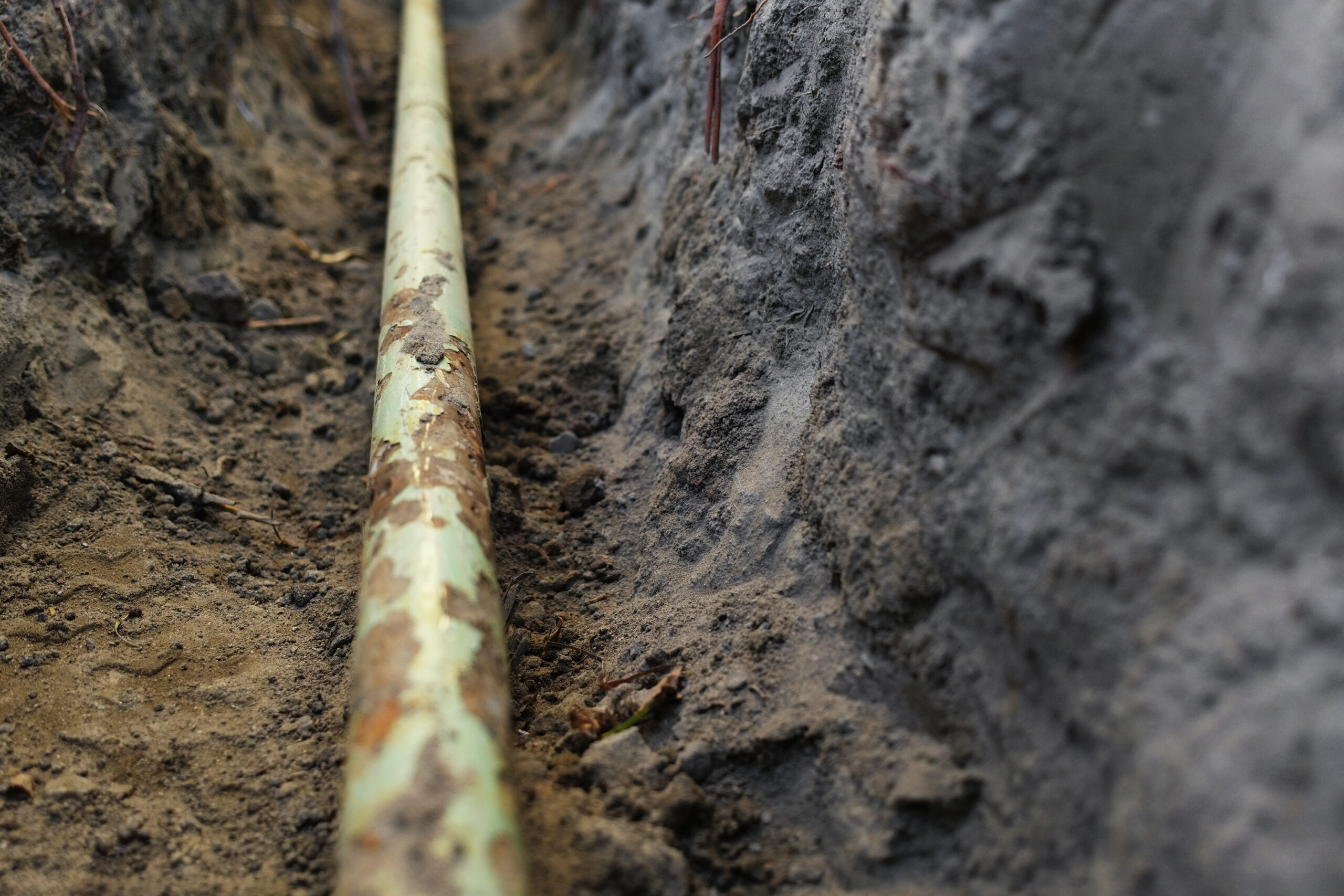
Trenchless pipe replacement uses one or two small access points to replace an underground pipe, instead of digging up the entire line. You’ll sometimes hear this called “no-dig” sewer line replacement, but some digging is still part of the process.
The old pipe’s path guides where the new one goes, so your yard, landscaping, and any concrete or pavers stay mostly untouched.
Before we recommend trenchless pipe replacement, we run a camera down the line and take a close look at:
- The pipe’s overall condition
- Where the pipe is located
- How it was originally installed
- How many turns or bends it has
That inspection tells us whether this method is a good fit for your home, and it gives you a real look at what’s going on underground before you have to make any decisions.
When Do You Need Trenchless Pipe Replacement?
Trenchless pipe replacement is typically called for in one of two situations:
- You’re experiencing water and/or sewage back-ups in your home
- Your pipes are old, cast iron, and need to be replaced
If you’re experiencing a back-up of any kind, the first step is to call for a Lee Company emergency plumber. Simply put: We’ve got your back on back-ups. We’re available 24/7 to address the immediate problem and help you prevent additional, avoidable damage to your home and valued contents. We also understand that few plumbing emergencies are as unsettling as a clogged sewer line backing up into your home. It’s a health hazard that needs to be dealt with ASAP.
“We care about your landscaping, irrigation, and electrical lines. We want to do what’s best for our customers, saving you the hassle of cleanup, time, and money.”– Plumbing Installation Manager at Lee Company
Sewer Lines vs. Water Lines vs. Other Underground Pipes
Trenchless replacement works similarly across different underground lines, but the reason you may need replacement depends on the type of pipe.
- Sewer lines: Usually need attention because of backups or clogs that keep coming back, often caused by root intrusion or a cracked pipe.
- Water, gas, and storm drain lines: More likely to need replacing because the pipe itself has worn out or gotten damaged over time.
A camera inspection helps us determine what is happening inside the line and whether trenchless replacement fits the problem.
The Trenchless Pipe Replacement Process
The trenchless pipe replacement process uses hydraulic equipment to pull a new pipe through the path of the old one, breaking the old pipe apart as it goes. The method described here, called pipe bursting, is the trenchless approach we use for qualifying underground lines:
- To access the line, we will excavate one or two locations and set up the equipment needed to pull the new line through. Our excavation will be as minimal as possible.
- A “bursting head” will be attached to a large cable that we’ll run through the existing line. This bursting head is connected to a flexible plastic pipe that is fused.
- We’ll use hydraulic equipment to pull the cable through the existing line. As the bursting head goes through, it will break open the old line and pull the new line through.
- Once the cable is completely through and the line is replaced, we’ll perform another camera inspection to ensure the new line is ready to meet all your needs.
- We’ll cover up the small area that we excavated.
Pipe Bursting vs. CIPP Lining: What’s the Difference?
Pipe bursting and CIPP lining are the two main methods used for trenchless pipe replacement. Pipe bursting replaces the old pipe entirely, while CIPP lining (cured-in-place pipe lining) rehabilitates it from the inside without removing it. The right method depends mostly on the condition of the existing pipe.
| Method | How It Works | Pipe Condition Needed | Diameter |
| Pipe Bursting | Breaks apart the old pipe while pulling a new one through the same route | Works on collapsed, sagging, or badly deteriorated pipe (e.g., rotted cast iron) | Can increase the pipe’s diameter if needed |
| CIPP Lining | Installs and cures a resin liner inside the existing pipe | Requires structurally intact pipes; cracks, root damage, or leaking joints are fine, but not collapsed or misaligned | Maintains or slightly reduces the existing diameter |
If you’re comparing quotes from different contractors, knowing which method is being proposed can help you ask better questions, since the right method depends on the actual condition of your pipe.
Benefits of Trenchless Pipe Replacement
Trenchless pipe replacement lowers the cost and disruption of replacing an underground pipe compared to traditional excavation, mainly by limiting digging to one or two small access points instead of a full trench. That difference affects both what you pay and how long the project takes, since less digging means less to repair once the work is done.
Lower Cost
Traditional replacement often comes with added costs for repaving, replanting, or rebuilding whatever sat above the old pipe. Trenchless pipe replacement cost tends to run lower than a full dig-and-replace job because that restoration work is mostly avoided.
Shorter Timeline
Fewer excavation points generally means fewer days of work at your property, since crews aren’t digging and then backfilling a full trench. Most trenchless projects wrap up in under 48 hours, compared to the several days a traditional dig-and-replace job can take.
Less Disruption
Because the work is limited to one or two access points, most of your yard, driveway, and outdoor space stays usable while the project is underway, instead of being blocked off by a trench.
Reduced Risk of Future Leaks
A pipe installed in one continuous piece has fewer joints where leaks typically start, which can mean fewer repair calls in the years after installation, and fewer entry points for tree roots to work their way in.
“Another advantage of this process is that no fittings are required, so the chance of cracks is reduced. The new pipes are fused together before they are put in place.” – Plumbing Installation Manager at Lee Company
Backed by a 10-Year Warranty
Every trenchless line we install comes with a 10-year warranty on the pipe itself, so you have coverage in place if an issue comes up after the job is finished.
Downsides of Trenchless Pipe Replacement
Both pipe bursting and CIPP lining have limits tied to the pipe’s condition, its surroundings, and what’s causing the issue.
Site and Access Limitations
Pipe bursting still needs enough access at the entry and exit points to run the cable and pull the new pipe through. Nearby utilities, tight underground conditions, or the pipe’s existing material can affect whether that access is feasible.
Obstructions Inside the Pipe
Roots, buildup, or debris inside the old pipe can get in the way of a clean pull, and some obstructions need to be cleared before trenchless work can move forward.
CIPP-Specific Limitations
CIPP lining comes with its own set of considerations. The liner needs time to cure once it’s installed, and it slightly reduces the pipe’s inside diameter. Pipes with significant misalignment or other structural issues may need repair before a liner can be installed properly.
Trenchless pipe replacement isn’t the right fit for every situation, and the amount of digging involved shouldn’t be the only thing that decides your approach.
We always evaluate the pipe’s location, installation, and number of turns before recommending trenchless replacement. If that inspection points to a different approach, you’ll see that option laid out before any work is approved.
Common Signs Your Main Line Needs Underground Repair
- Repeated sewer backups
- Drains that slow down together
- Gurgling toilets
- Lingering sewer odors
- Water pooling in the yard above the sewer line
- A patch of grass that’s noticeably greener or wetter than the rest of your lawn
Tree root intrusion is one of the most frequent problems we see behind sewer line issues.
“When roots get into the sewer lines, they block the pipe, and waste starts getting caught. Over time, it can get so bad that not even water can go through.” – Plumbing Installation Manager at Lee Company
Pipe material also gives us useful context. According to our own trenchless replacement jobs during the past year:
- Cast iron pipes accounted for 62%
- Vitrified clay pipe (VCP) accounted for 38%
Our internal data also shows why home age alone is not enough to judge an underground pipe. On jobs where we had records, the typical house was built before 1985, but the pipe itself averaged only 20 to 30 years old (meaning the original line had likely already been replaced or added to at some point).
That’s why we always look at the pipe’s actual material, age, and condition instead of assuming an older home automatically has its original underground line.
Older homes tend to run into other plumbing issues beyond sewer line problems alone, so it’s worth keeping an eye on your system as a whole rather than just the main line.
Find Out if Your Home Is a Good Fit for Trenchless
A camera inspection is the best way to determine whether trenchless replacement is right for your home. We evaluate the pipe’s condition, location, installation, number of turns, and the cause of the problem.
If you’re dealing with an active sewage backup, our 24/7 emergency repair service can handle that first. Once the immediate issue is under control, we inspect the line and, if trenchless replacement is a good fit, a project manager will review the findings and provide a free quote.
Schedule your camera inspection with us to get a clear answer for your home.
Trenchless Pipe Replacement FAQs
What are the disadvantages of trenchless pipe replacement?
Trenchless methods still require some digging and aren’t right for every pipe or property. Pipe bursting can be affected by the pipe’s material, blockages, soil conditions, and nearby utility lines. CIPP lining needs the right pipe shape and a curing period before it’s usable.
Is trenchless pipe lining worth it?
Trenchless lining is worth considering when your existing pipe can be rehabilitated and avoiding major excavation matters to you. A camera inspection should confirm the pipe’s condition before choosing CIPP or another trenchless method.
What is the typical lifespan of trenchless pipe lining?
CIPP liners are commonly designed to last 50 years or more. Actual lifespan depends on the liner, installation quality, and the condition of the pipe it’s installed in.
Will homeowners insurance pay for sewer line replacement?
It depends on your policy and what caused the damage. Sewer-backup coverage is often a separate, optional add-on. Ask your insurer directly whether underground service-line replacement is covered before assuming it is.
How do I know whether I need trenchless replacement or a regular sewer repair?
A camera inspection is the best way to tell, since the right fix depends on what’s actually happening inside the line. We use camera inspections to find the cause of a backup and determine whether trenchless replacement or a more targeted repair makes more sense for your pipe.